“Never Again for Everyone”: Why Albanese and Erakat Deserve an Honorary Doctorate
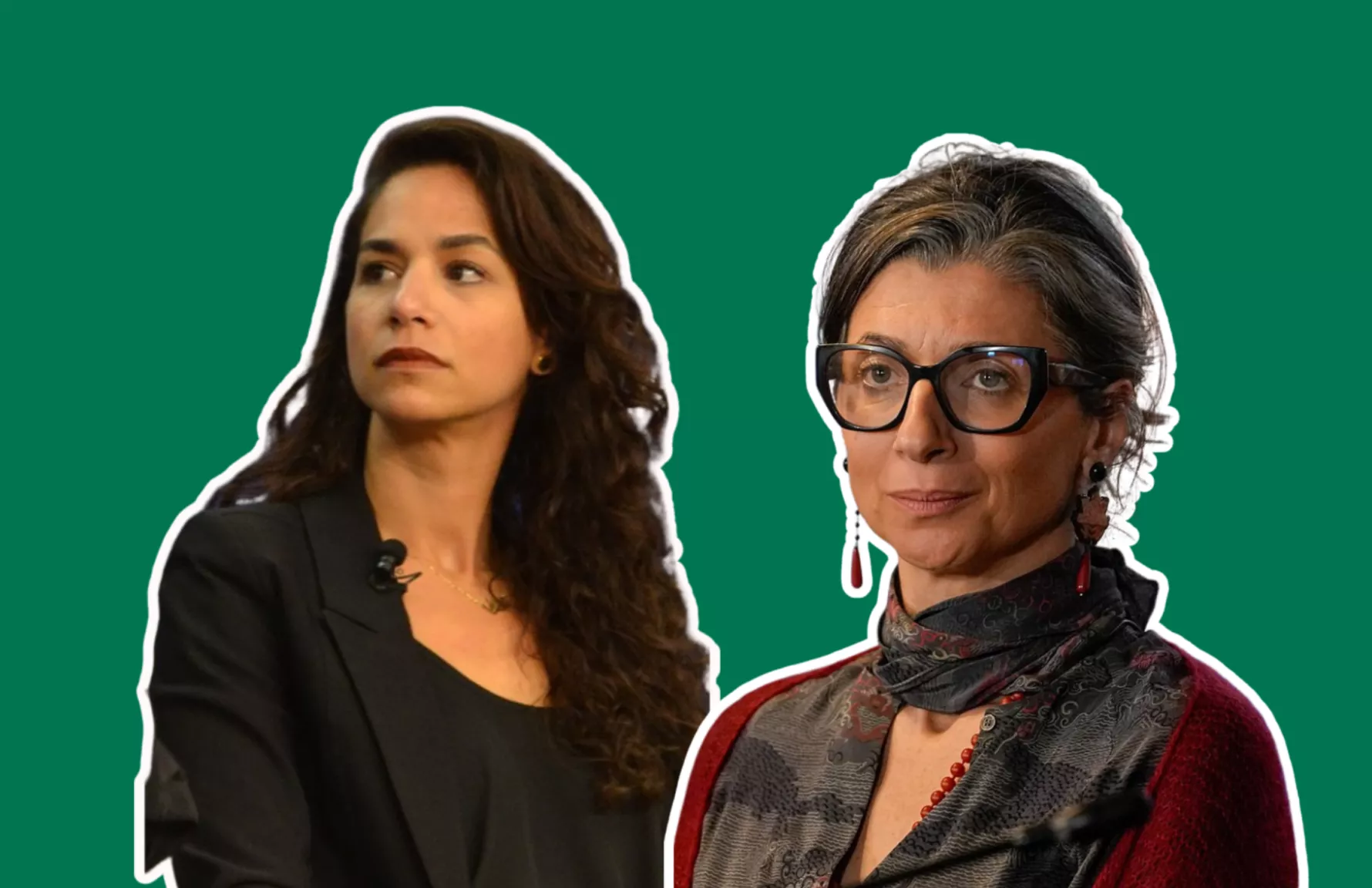
On April 2, three Flemish universities will grant an honorary doctorate to Francesca Albanese. On the same day, Palestinian professor Noura Erakat will also receive an honorary doctorate from the University of Antwerp. “Albanese and Erakat deserve everyone’s support, including that of Jewish communities,” argue Itamar Shachar and Sarah Katz-Lavigne of Another Jewish Voice.
In her role as UN Special Rapporteur on the Occupied Palestinian Territories, Francesca Albanese is a leading voice in holding Israel accountable for its genocidal war on Gaza. She joins other experts in international law, such as Palestinian professor Noura Erakat, who will receive an honorary doctorate from the University of Antwerp on the same day.
Half-jokingly, we at Another Jewish Voice (Een Andere Joodse Stem) told each other that we should be prepared with a counterstatement if Zionist organizations accused Albanese, Erakat, the universities, or all of them, of blatant antisemitism. Less than 10 hours later, the Forum of Jewish Organizations (FJO) published a response confirming this fear, in which they deemed some of Albanese’s statements “anti-Semitic under the IHRA definition.” The IHRA definition has long been criticized by the EAJS and other Jewish organizations because it wrongly conflates anti-Semitism with legitimate criticism of the State of Israel and its Zionist ideology.
Hobbes or Lemkin?
Historically, Jewish intellectuals and legal scholars were among those who contributed to the development of international law and institutions. Examples include Raphael Lemkin, a Polish-Jewish lawyer best known for coining the term “genocide” and for his efforts to bring about the adoption of the Convention on the Prevention and Punishment of the Crime of Genocide.
Drawing on their experiences during the Holocaust, Jewish survivors such as Lemkin—joined by allies around the world—sought to ensure that the lesson of “never again” truly meant “never again for anyone.”
Not all Jews—or their supporters—agree with this message. As Peter Beinhart noted in his lecture in Brussels this year, some carry with them the Hobbesian lesson of the Holocaust: that the world is a cruel place and that those who wish to survive must rise to the top—otherwise, they are easy prey for others.
The creation of a Zionist state in Palestine was consistent with this perspective: the colonization of a land and the forced expulsion of its population were justified in order to ensure Jewish security in the wake of the Holocaust.
This process of settler-colonialism reached one of its most brutal low points with the current Israeli campaign of bombardment, displacement, starvation, and ethnic cleansing in Gaza and, increasingly, in the West Bank. According to the International Court of Justice (ICJ), this amounts to a plausible genocide. International law experts such as Albanese and Erakat, along with genocide researchers and Israeli human rights organizations, have asserted that Israel’s actions constitute genocide.
The gradual development of international humanitarian law—from the 1948 Universal Declaration of Human Rights to the international treaties that implement it—was aimed at imposing restrictions on human cruelty, regardless of who commits it. Many of these legal texts and institutions had roots in colonial history. Nevertheless, several decolonized states were able to effectively use international law to protect themselves against neocolonial interference.
Blatantly disregarding international law
The current Israeli-American attack on Iran painfully demonstrates that international law is often distorted or simply disregarded by powerful states and their allies.
Historically, the United States has sought to position itself as the guardian of the postwar international order, despite the fact that it has utterly undermined it through its direct and indirect attacks on states—from Latin America to the Middle East—that have sought to resist its imperialist projects.
Until recently, it seemed that the U.S. preferred to maintain this order—or at least the appearance of it—rather than abandon it entirely. But now there is someone in the White House who declares, “I don’t need international law,” backed by a Pentagon chief who blatantly disregards international law.
A clear indication of the ongoing effort to reshape international institutions for the benefit of a select few was the appointment of the ironically named “Board of Peace” to oversee the Gaza Strip.
Permanent membership requires $1 billion, a sum that remains out of reach for the states or populations it purports to serve. The current U.S.-Israeli attack on Iran, accompanied by an Israeli invasion of Lebanon, not only demonstrates a complete disregard for all international institutions, procedures, and laws: there are also growing signs that Israel is attempting to extend its “Gaza doctrine” to other regions.
Gaza is therefore once again a laboratory, this time not only for the arms industry, but for attempts to reshape the international order. Governments in Europe and the Middle East that failed to stop Israel in its ruthless criminal assault on Gaza now find themselves on the receiving end of a regional war that could easily spill over into Europe.
“Never Again for Everyone”
Figures such as Albanese and Erakat are striving to uphold international law by working tirelessly to draw attention to the suffering of the Palestinians and to the complicity of Western governments in Israel’s genocide in Gaza.
Several Jewish organizations have spoken out in support of Albanese and protested against the accusations of antisemitism leveled against her. They crucially noted that “the erroneous conflation of the State of Israel with the Jewish people actually exposes and endangers Jews.”
In 2025, Noura Erakat received the Amnesty International Chair from Ghent University, in recognition of “her unwavering pursuit of justice and her significant contributions to human rights and international law.”
Albanese and Erakat are principled voices for the preservation of human dignity in Gaza and thus truly embody the principle of “never again for anyone.” They symbolize the upholding of international law, which humanity needs most in these times of brutal, criminal wars.
These wars lead not only to unimaginable human suffering, but also to the total collapse of any possibility of maintaining a peaceful international order. That is why Albanese and Erakat deserve not only an honorary doctorate, but also the informed and active support of everyone—including within Jewish communities worldwide—who believes in human rights and justice for all, rather than for an increasingly narrow group.
Itamar Shachar is a professor of sociology at the University of Hasselt. Sarah Katz-Lavigne is a member of the Recht en Ontwikkeling research group of the University of Antwerp. They are both members of Another Jewish Voice.